
The era of Digital Transformationhascompletely reshapedtravel behavior. Modern travelers are not just consumers; they are thearchitects of experiences– those whodemandinstant interaction,absolute accuracy, andsuper personalizationon digital platforms. The entire journey, from seeking inspiration to booking services, is carried out throughthe power of smart dataand mobile devices. Their ultimate goal is a seamless travel experience.rải nghiệm du lịch không ma sát.
In this context,the AI Virtual Assistant for Digital Travelemerges as arapid solution.. Thanks to its ability tounderstand natural language (NLP), analyze data, and integrate systems seamlessly, AI not only provides information but alsopredictsneeds,suggests unique servicesand becomesa reliable virtual companionin real-time.. This solution helps travel businesses. Giải pháp này giúp doanh nghiệp du lịch optimize processesandelevate service quality to a new height. This article willdecodeAI virtual assistants, analyze the value they bring, and introduce practical applicationsof AI virtual assistants in the tourism sector ofStar Global– apioneering modelin the digital transformation journey of Vietnam's tourism.I. Overview of digital transformation in the tourism industry and the emergence of AI virtual assistants
The shift from traditional tourism to digital tourism
The global tourism industry is entering the digital age, where
AI virtual assistantsplay a strategic role inoptimizing the tourist experience, from the initial planning stage to the end of the journey. Especially in the post-pandemic phase and the context of fierce competition, AI is not just a supporting technology but also a factorfor competitive growth for travel agencies, hotels, and destinationsAccording to a recent study, the global AI market in tourism is expected to expand significantly from about 92.46 billion USD in 2023 to over 397 billion USD by 2028, with a CAGR of 33.9% — this indicates the immense value that AI virtual assistantsbring to the industry.The application ofAI virtual assistants
is no longer a “new trend” but has become a vital factor in today's digital tourism industry, helping businesses quickly update user demands, optimize operational processes, and retain customers more effectively. AI virtual assistants are no longer a “new trend” but have become a vital factor in the current digital tourism industry, helping businesses quickly update user demands, optimize operational processes, and retain customers more effectively.
 AI virtual assistant creates a smart tourism ecosystem, opening up the era of future digital experiences
See more>>>>>70% of travelers worldwide use AI in their travel journeys
See more>>>>>The application of AI in tourism provides impressive experiences for travelers
II. What is an AI virtual assistant? How it works in digital tourism
1. Definition and nature of the technology
AI virtual assistantin tourism is a system that applies artificial intelligence (AI) technology to enable automated interaction, natural language processing, user behavior analysis, and contextually accurate responses — allowing travelers to receive support 24/7 with just a simple question. Core technologies include natural language processing (NLP), machine learning, and large language models (LLM), enablingAI virtual assistantnot only to answer inquiries but also to understand the user's intent and habits.
2. Why is the “AI virtual assistant” important?
As travel behavior increasingly shifts to the digital environment, travelers tend to seek quick, intuitive, and easily accessible information across various devices. In this context, the AI virtual assistant offers several practical values:
Supports effective information retrieval and orientation
Instead of manually searching across multiple websites or platforms, travelers can ask direct questions and receive answers that are compiled, organized, and presented more clearly.
Supports service connectivity at a level appropriate to existing infrastructure
Depending on the level of integration of each system, the AI Virtual Assistant can provide links, redirect, or synchronize information with ticket booking platforms, accommodation booking, digital maps, and customer support centers – helping to reduce intermediary actions for users, rather than fully automating.
Personalizing information at a reference level
Based on the data that users provide during interactions, the AI Virtual Assistant can offer reference suggestions about content, services, or itineraries, helping users access information that better meets their actual needs.
According to a report by the World Tourism Organization (UNWTO), more than 65% of travelers currently use digital platforms to plan their trips, and this number is expected to rise to 78% next year. In this context, the AI Virtual Assistant and AI Agent systems are gradually becomingthe center of personalized travel experiences, playing a role in connecting data, technology, and user emotions in the digital travel ecosystem.
 The AI Virtual Assistant shapes the future of travel, where each journey is guided by technological intelligence
See more>>>>The trend of applying AI in tourism helps enhance operational efficiency
III. Application of AI Virtual Assistant in the tourism sector of Star Global
1. Introduction to Star Global's AI Virtual Assistant solution
In the context of the tourism industry entering a phase ofcomprehensive digital transformation, the demand for personalized experience solutions, providing intelligent information, and context-based interactions is becoming increasingly urgent. Seizing this trend,Star Global is pioneering the development of a deeply integrated AI Virtual Assistant system within the 3D/360 digital travel space., creating a smart and seamless travel experience ecosystem.
Not only limited to the role of information retrieval, Star Global's AI Virtual Assistant is designed asa digital companion, capable of understanding the needs, context, and journey of travelers. From the stage of exploring destinations, planning trips, on-site experiences to post-journey, AI plays a supportive role throughout, contributing totransforming traditional travel experiences into interactive and personalized digital travel experiences..
The combination of AI with 3D/360 technology not only enhances the perceived value for travelers but also opens up new approaches for destination promotion, heritage preservation, and sustainable tourism development.
2. Key features of the Star Global AI Virtual Assistant
2.1. Interactive 3D/360 virtual tour guide
The AI Virtual Assistant allows travelersto explore destinations online right in a 3D/360 space, with the ability to guide through specific areas and contexts. Through pre-built content scenarios and the flexible response capability of AI, travelers can:
- Learn about the history, culture, and architecture of the destination.
- Move flexibly between spaces in the digital environment.
- Interact directly with natural questions, rather than just reading static content.
This solution is particularly effective inattracting customers before the trip, supporting education – communication, as well as promoting lesser-known destinations.
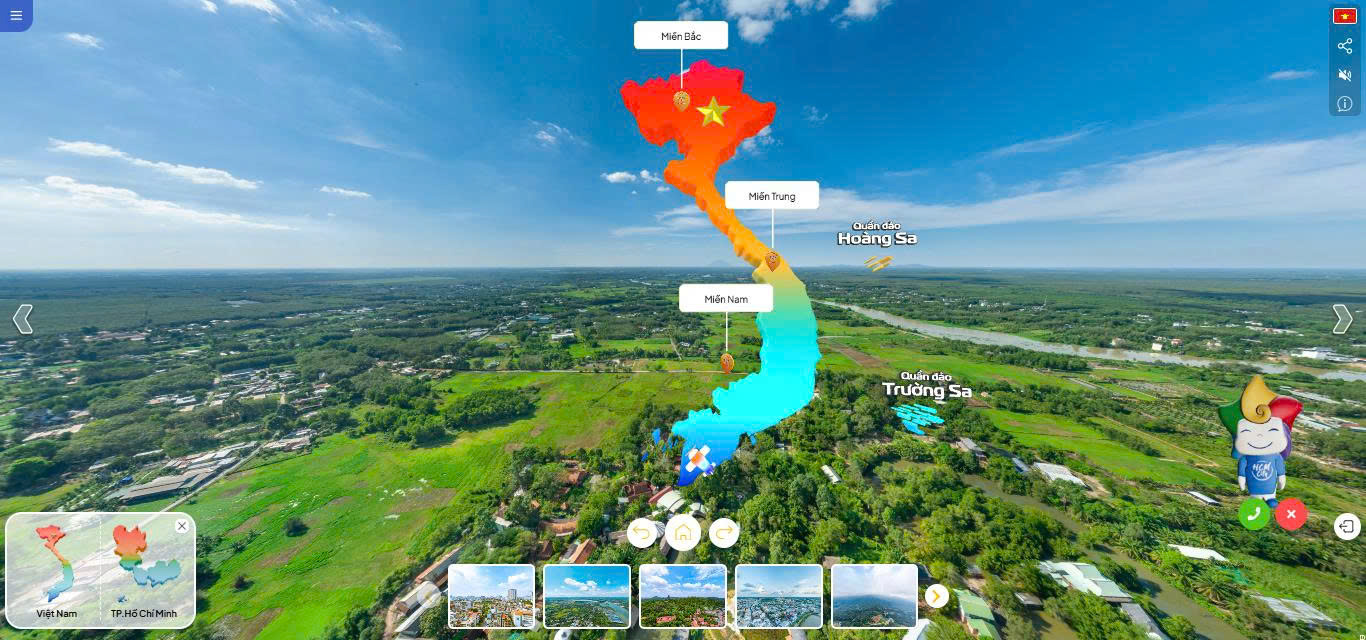 Star Global's AI Virtual Assistant accompanies the Vietnam Tourism project – 34 provinces and cities
See more>>>>Smart Tourism 3D/360 - A journey to explore 34 provinces of Vietnam with AI Virtual Assistant Bé Sao
2.2. Personalized travel itinerary consultation
Based on the collection and analysis of user behavior data (needs, time, budget, personal preferences...), Star Global's AI Virtual Assistant has the abilityto propose highly personalized travel itineraries..
Specifically, the AI can:
- Suggest suitable sightseeing routes based on the length of stay.
- Advise on dining, accommodation, and entertainment options that fit the budget.
- Flexibly adjust the itinerary according to real conditions or emerging needs of travelers.
As a result, each traveler has a unique journey, optimizing both experience and cost, contributing toincreased satisfaction and the likelihood of returning to the destination..
2.3. Direct interaction support at the destination
When travelers are at the sightseeing location, the AI Virtual Assistant continues to play a supportive role through various access methods such asQR code, mobile application.
The AI can:
- Guide directions, suggest nearby attractions.
- Provide information on services, opening hours, and ongoing events.
- Explain cultural and historical content in real context.
As a result, the travel experience is elevated from mere 'sightseeing' toactive and in-depth exploration, helping travelers better understand the local values of each destination.
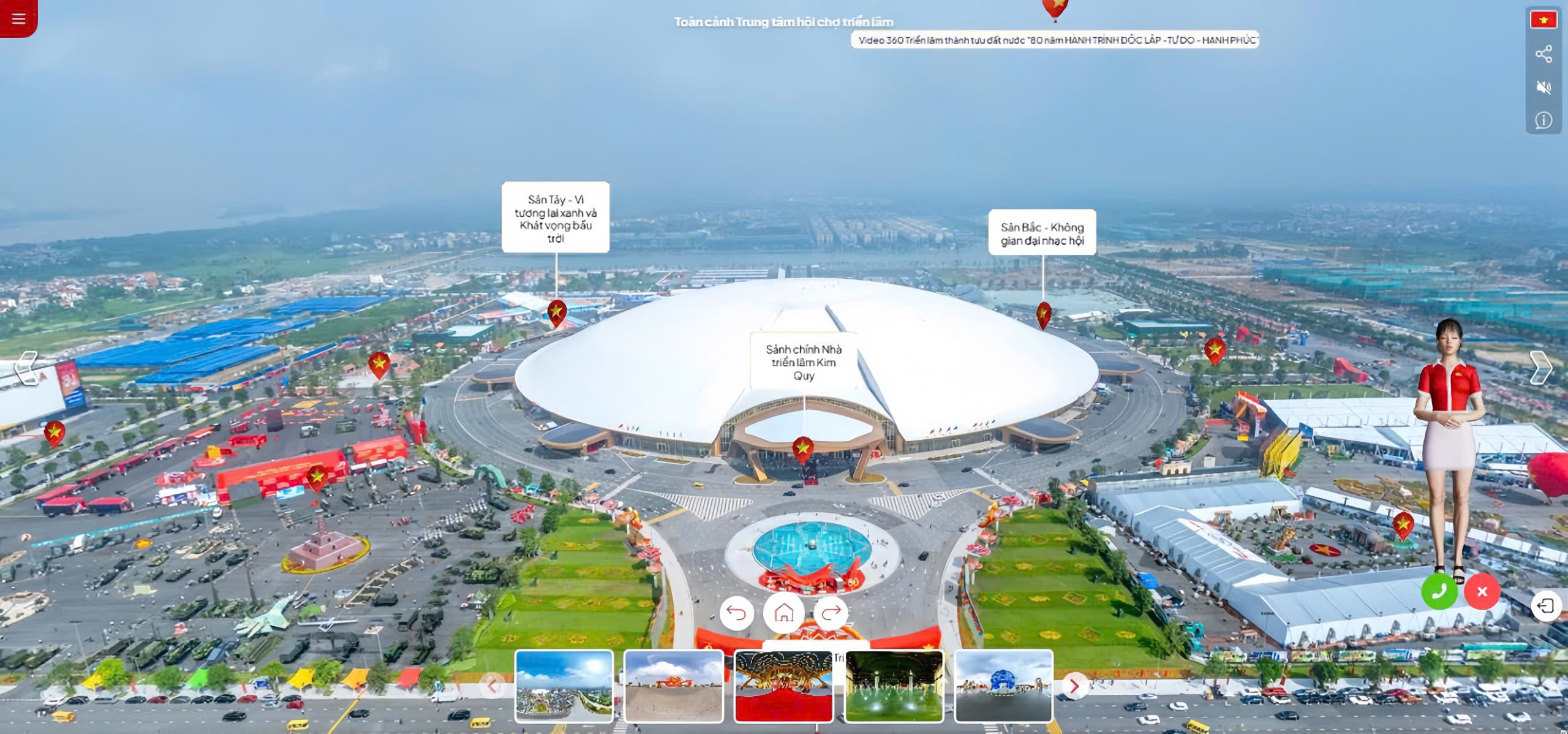 AI Virtual Assistant Thúy Kiều – Star Global's AI solution at the National Exhibition and Fair Center VEC
See more>>>>>Smart Tourism 3D/360 - Explore the National Exhibition Center with the "digital guide" Thúy Kiều
IV. Benefits of AI virtual assistants for travelers and businesses
1. Enhancing the traveler experience
1.1 24/7 support, unlimited by space and time
Unlike traditional consulting models that depend on working hours and human resources, AI virtual assistants can operate continuously 24/7, ready to assist travelers anytime, anywhere. Travelers can ask questions and receive immediate responses, even when in different time zones, ensuring that their journey is not interrupted by barriers of time or geographical distance.
1.2 Personalizing travel itineraries according to actual needs.
Based on the information that travelers actively provide or that arises during interactions, such as the purpose of the trip, expected budget, length of stay, and search history, AI virtual assistants can suggest relevant recommendations for destinations, itineraries, and services during the planning stage. The level of personalization is flexibly adjusted according to available data, helping travelers access selective information, reducing the need to manually search across multiple platforms, and supporting quicker and more convenient decision-making in the trip preparation process.
1.3 Multilingual support, enhancing information accessibility
AI virtual assistants can communicate and provide information in multiple languages, making it easier for international travelers to access content about destinations, services, and local culture. This helps minimize language barriers, enhances satisfaction levels, and creates a friendly, professional atmosphere for travelers when experiencing digital tourism.
See more>>>> AI applications in tourism: Personalizing experiences, optimizing itineraries
2. Benefits for the tourism business
2.1 Optimizing operations and enhancing customer service efficiency
The application of AI Virtual Assistants helps businesses automate the processes of consulting, booking, and basic customer care. As a result, response times are significantly shortened, operational processes become more flexible and efficient, while ensuring consistency in providing information and services.
2.2 Reducing labor costs, enhancing the quality of specialized services
When AI Virtual Assistants handle frequently asked questions and provide basic information support, the staff can focus more on specialized activities such as high-end experience consulting, key customer care, and developing new tourism products. This not only helps optimize labor costs but also enhances the overall quality of service.
2.3 Collecting and leveraging valuable data for sustainable development
Data generated from the interaction between travelers and AI Virtual Assistants is an important source of information, reflecting real-time travel needs, behaviors, and trends. Businesses can leverage this data to analyze the market, adjust business strategies, improve service quality, and develop tourism products that better meet the actual needs of customers.
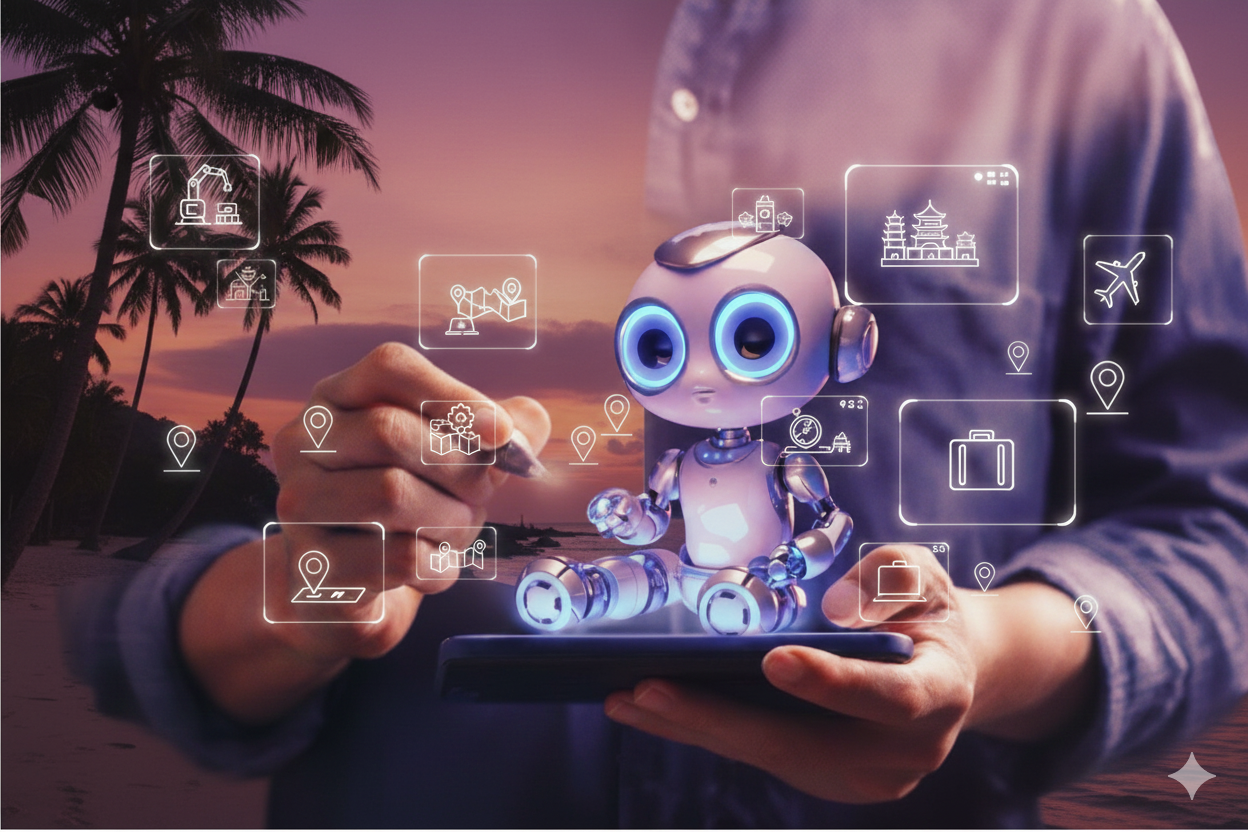 AI Virtual Assistants turn every trip into a personalized experience.
See more>>>>>> How do AI, chatbots, and virtual assistants help the 'bosses' in the tourism industry?
CONCLUSION:
In summary, through this exploration journey, we can affirm thatAI Virtual Assistantsare indeedthe "catalyst"powerful, essential for creating a top-notch digital travel experience. This technology not only helpscompletely resolvebottlenecks in speed and personalization, but also serves as astrategic spearheadto help travel businesses enhance performance, reduce costs, and maximize profits. The presence ofAI Virtual Assistantsmarks a decisive transformation, shifting the travel industry from passive to proactive, from general service totailored carefor each individual. With a commitment to leading the digitalization effort,Star Globalproudly offers advancedAI Virtual Assistantsolutions, refined todeeply understandthe market and the behavior of Vietnamese travelers. Don't let your business be left out of thisdigital revolution.Let's join hands withStar Globalto take action todayto gain a competitive advantage, reshape services, and unlock unprecedented growth potential. The future of travel has arrived – and it is waiting for you to conquer!