
In the digital age, artificial intelligence has surpassed the role of a mere support tool. In the early stages, AI was primarily known throughAI Chatbots, which could answer questions and assist users according to scripts, but today, the emergence ofAI Agentsmarks a pivotal transformation. AI not only 'understands' humans but also begins toself-reason, make decisions, and take actionsto achieve assigned goals. According to a report byMcKinsey Global Institute, AI could contribute up to$13 trillion to the global economy by 2030, with the largest value not coming from traditional AI Chatbots, but from systems ofintelligent automation AI Agents, capable of replacing many complex operational processes of businesses. This shows that AI Agents and AI Chatbots are no longer on the same 'evolutionary path', but have diverged into two branches with completely different values.
I. Why are AI Agents and AI Chatbots often confused?
In fact, many businesses today still refer to all conversational AI systems as Chatbots, even when those systems have elements of AI Agents. The reason lies in the fact thatAI Agents and AI Chatbots both communicate with humans through natural language, appearing on websites, applications, or digital platforms, which blurs the lines between the two concepts.
However, if we look deeply into their operational nature, the differences are very clear.AI Chatbotoperates on a feedback mechanism – meaning it only responds when the user asks a question. Meanwhile,AI Agentis designed to proactively pursue goals, analyze data independently, plan, and execute actions. This difference in “thinking” is what increasingly positions the AI Agent asa new generation digital assistant, while Chatbot only serves as the initial communication platform.
See more>>>>> AI Agent: A turning point shaping the technology market in 2025
II. What are AI Agent and AI Chatbot?
2.1 AI Agent – When artificial intelligence has goals and autonomous capabilities
Unlike Chatbot,AI Agentis built as a self-sufficient AI entity, capable of receiving goals, analyzing context, making decisions, and executing actions without the need for continuous human intervention. The AI Agent not only responds to information but alsoactively coordinates multiple tools, data, and systemsto optimally complete tasks.
For example, in business, the AI Agent can automatically analyze customer behavior, suggest marketing strategies, implement campaigns, and measure effectiveness in real-time. In the field of 3D/360 technology or digital tourism, the AI Agent can act as adigital operations assistant, guiding user experiences, personalizing content, and optimizing the experience journey. This ability to “think – act – learn” has made the AI Agent a significant advancement over traditional Chatbots.
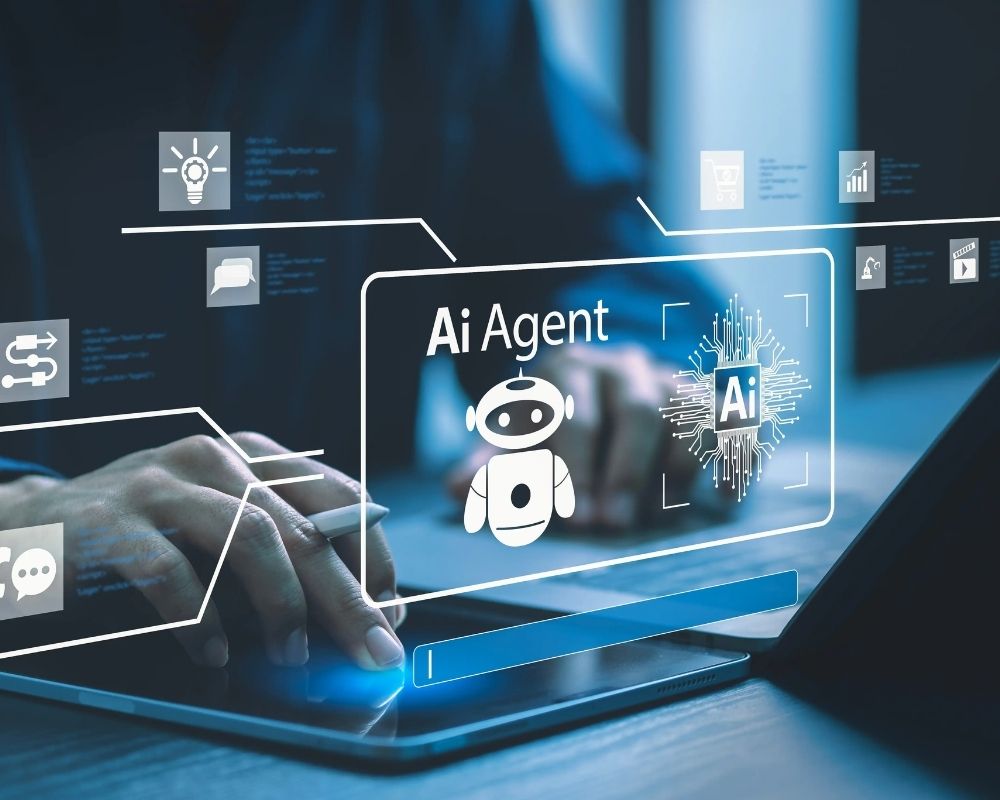 AI Agent – The digital brain driving growth in the AI era
See more>>>>>Technology trends 2025: explosive development of AI Agents
2.2 AI Chatbot – The Foundation of Intelligent Interaction
AI Chatbot is the most common form of interactive artificial intelligence, designed to simulate conversations between humans and machines. Chatbots often use technologyNLP (Natural Language Processing)combined with training data to provide appropriate answers to user questions. Over the years, Chatbots have played an important role in customer service, product consulting, and 24/7 information support.
According toGartner, by2026, more than75% of global businesseswill use Chatbots as a primary communication channel with customers. However, despite becoming increasingly intelligent, Chatbots still have apassive, nature, lacking the ability to act independently outside the scope of conversation. This makes it difficult for Chatbots to address complex operational challenges – where businesses need AI not just to “speak,” but also to “act.”
If we consider Chatbots as the surface communication layer of AI, then AI Agents are the “operational brains” behind them. Chatbots help businesses communicate better with customers, while AI Agents help businessesmake better decisions and operate more intelligently. This is not a replacement relationship, but a relationship of inheritance and enhancement.
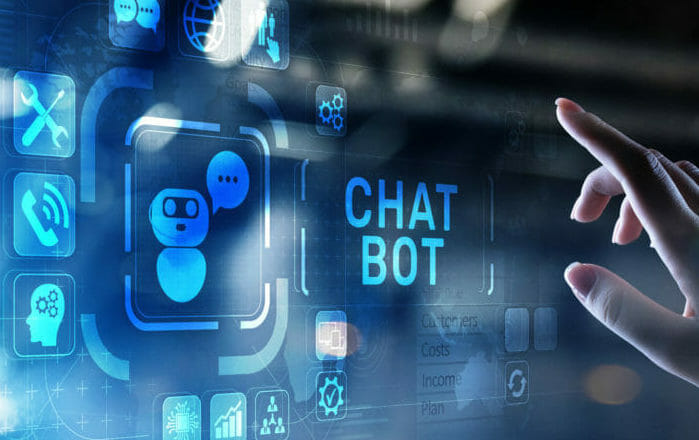 AI Chatbot – The Information Bridge in the Digital Age
III. The Core Differences Between AI Agents and AI Chatbots
3.1. Differences in Operational Nature: Passive Responses and Autonomous Mechanisms
The core difference betweenAI Agents and Chatbotsis not about how they "talk" to humans, but about how theyoperate behind the system. Chatbots are designed around a feedback mechanism, meaning that every action of the Chatbot starts from a specific question or request from the user. Even though they are integrated with modern AI and NLP, Chatbots still operate based on available training data, responding to short-term context and lacking the ability to initiate actions on their own without being triggered.
In contrast,AI Agentsare built as highlyautonomous AI entities. When given a goal, an AI Agent does not need humans to guide it step by step; it automatically collects data, analyzes context, infers possible scenarios, and chooses the appropriate course of action to achieve optimal results. AI Agents do not just "respond"; they alsoproactively act, monitor results, and self-adjust strategieswhen the environment changes. This operational mechanism has made AI Agents the core foundation of intelligent automation systems, far surpassing the conversational support role of Chatbots.
See more>>>>> The trend of applying AI in tourism helps enhance operational efficiency
3.2. Differences in "AI thinking": answering questions or solving problems
Chatbots are trained with the goal of optimizing their ability torespond quickly, accurately, and consistently, thereby enhancing the conversational experience with users. This is particularly effective in scenarios such as customer care, information consulting, and basic technical support – where issues are often repetitive and have clear answers. However, the thinking of Chatbots is inherently stilllinear., handling each individual request without forming a comprehensive view of the issue.
Meanwhile,AI Agentis designed with a system-level problem-solving mindset. Instead of just responding to a specific question, the AI Agent has the ability to connect various data sources, assess the entire context, and make strategic decisions. For example, the AI Agent not only answers “which product is the customer interested in,” but also analyzes behavior, predicts latent needs, suggests appropriate solutions, and directly implements the next actions. It is this multidimensional thinking and goal-oriented capability that increasingly positions the AI Agent as“the digital brain”in modern technology ecosystems.
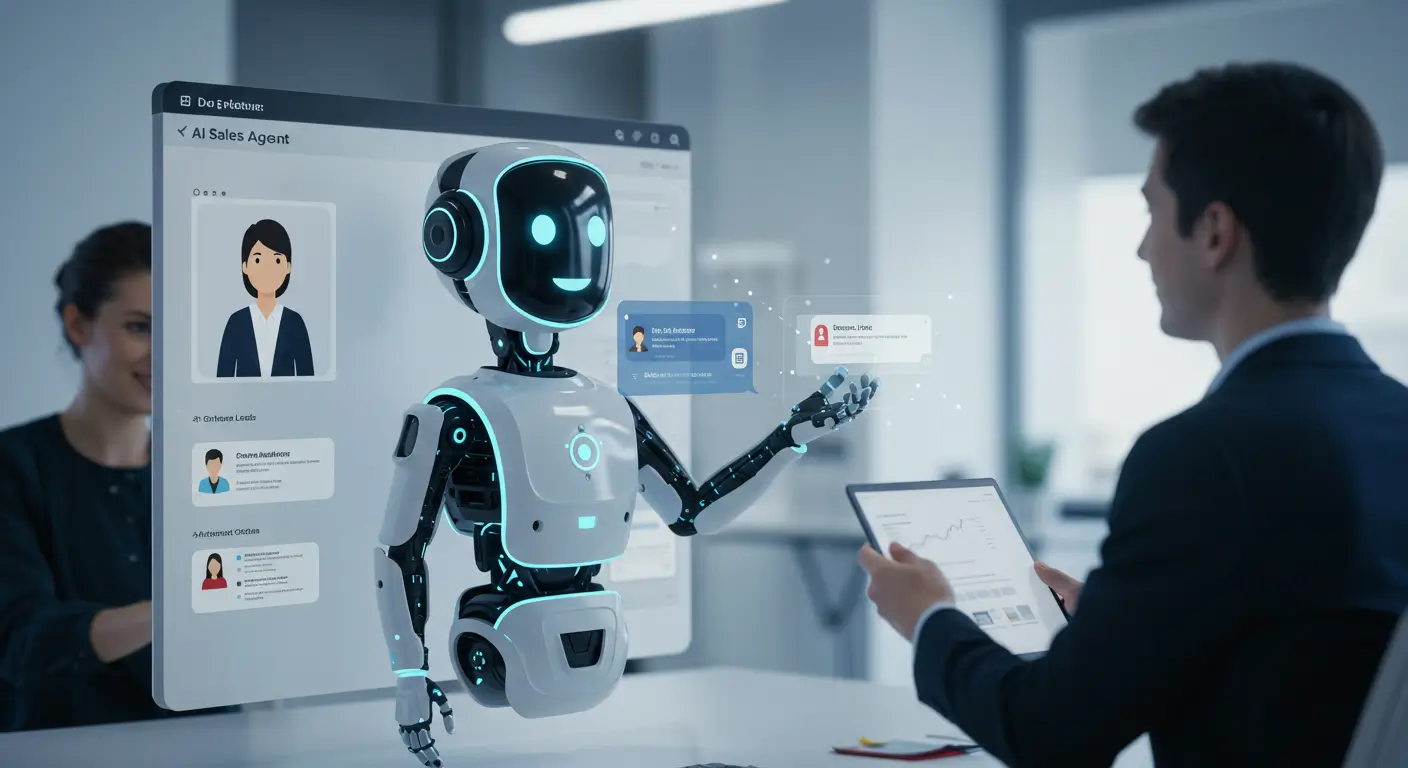 AI Chatbot enhances user experience across all digital platforms.
3.3. Differences in value provided to businesses
From a value perspective,Chatbots and AI Agents create two completely different levels of impact. Chatbots provide clear benefits in saving personnel costs, shortening response times, and enhancing customer experience in terms of communication. These are important values, especially for businesses in the early stages of digital transformation, but still primarily focus onoptimizing individual tasks..
At a higher level,AI Agents create strategic and long-term valuefor businesses. According to an Accenture report, organizations that implement AI Agents and intelligent automation systems can increase productivity by up to40%., while significantly reducing errors in the decision-making process. The AI Agent is not limited to a single department but has the ability to connect across marketing, sales, customer service, and data management. As a result, businesses can form a sustainable competitive advantage that traditional Chatbot models find difficult to achieve.
See more>>>>>3 steps to get started with AI Agent for your business
3.4. AI Agent and Chatbot in long-term digital transformation strategy
In the digital transformation roadmap, Chatbots often play the role ofa reasonable starting point, helping businesses quickly access AI and improve customer interactions. However, as the scale of data expands and operational processes become more complex, relying solely on Chatbots will soon lead businesses to reach a threshold of effectiveness. This is precisely whenthe AI Agent becomes an inevitable advancement, shifting AI from a supportive role to a collaborative operational role.
The difference between AI Agent and Chatbot, therefore, is not just a technological difference, but also a difference instrategic thinking. Choosing the AI Agent is a long-term development path, where AI directly participates in the value creation process, optimizes systems, and enhances competitive capabilities. In this context, Chatbots are not eliminated but become part of a larger ecosystem – where the AI Agent plays a central role in coordination and decision-making.
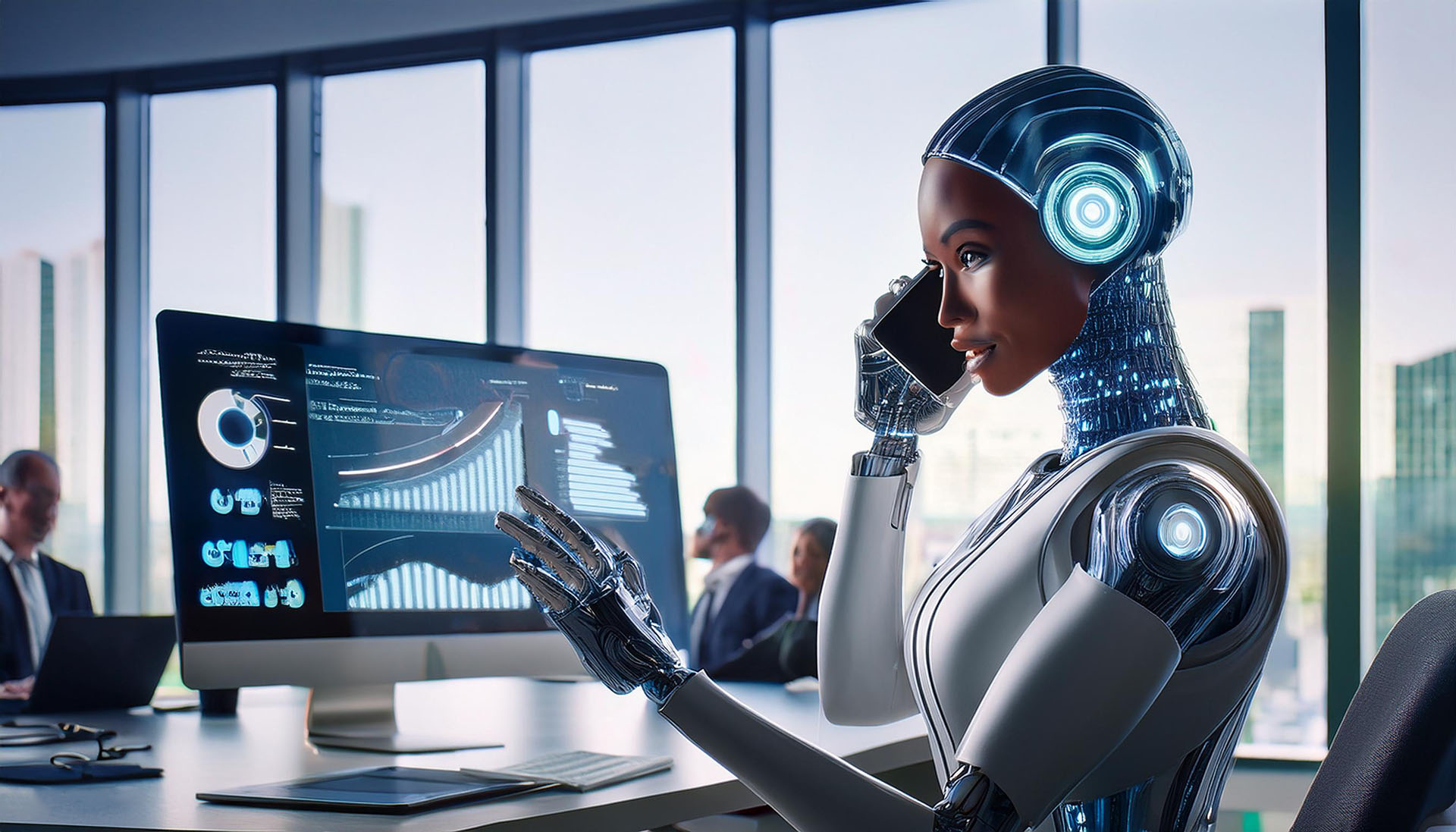 AI Agent – Autonomous artificial intelligence, making decisions and acting intelligently
IV. AI Agent and Chatbot applications in practice
4.1 AI Agent and Chatbot in businesses: from communication to intelligent operations
In the business environment,Chatbotis often deployed as the first point of contact with customers. Chatbots help answer questions, provide product advice, offer technical support, and maintain interaction 24/7, thereby reducing the workload for staff. At this stage, Chatbots act as a 'digital receptionist', improving user experience and standardizing the flow of incoming information.
However, as businesses move into the operational optimization phase,AI Agentbegins to demonstrate superior capabilities. AI Agents not only receive information from customers but also automatically analyze data, assess performance, propose solutions, and implement appropriate actions. According toPwC, companies that apply AI at the operational level, especially AI Agents, can increase profits by up to20–30%due to faster and more accurate decision-making. This is the clear gap between AI Agents and Chatbots in business practice.
See more>>>>>AI Agent - 'Digital Employee' helping businesses operate 24/7
4.2 AI Agent and Chatbot in digital marketing and customer experience
In digital marketing,Chatbotshelp businesses reach customers faster through websites, social media, and messaging apps. Chatbots can collect basic information, classify needs, and assist customers in making purchasing decisions. This is an effective tool to increase response rates and improve the customer journey in the early stages.
In contrast,AI Agentsare more deeply involved in the entire marketing lifecycle. AI Agents can automatically analyze behavioral data, predict trends, personalize content, and even adjust campaigns in real-time. According toSalesforce, more than68% of customersexpect businesses to understand their personal needs, and the AI Agent is the tool that helps realize that expectation. Compared to Chatbots, AI Agents provide a personalized experience at a strategic level, not just limited to conversation.
See more>>>> The application of AI in customer service: Opportunities and challenges
4.3 AI Agents and Chatbots in digital tourism and 3D/360 technology
In the field of digital tourism,Chatbotsare often used to provide destination information, itineraries, ticket prices, and customer support before, during, and after the trip. Chatbots help travelers access information quickly, reduce language barriers, and increase convenience in exploring destinations.
However, when combined with3D/360, AI Agentsopen up a completely new level of experience. AI Agents can act as digital guides, proactively leading travelers in 3D/360 spaces, personalizing content according to preferences and behaviors, while also analyzing data to optimize the experience journey. According toUNWTO, digital tourism solutions that apply AI and immersive technology can increase traveler engagement by more than40%. This is a clear demonstration of the superior value that AI Agents bring compared to traditional Chatbots.
 AI Agents in tourism – Personalizing journeys, optimizing experiences, and smart operations
See more>>>>>Smart Tourism 3D/360 Vietnam Tourism - 34 provinces and cities
4.4. AI Agents and Chatbots in the digital transformation ecosystem
At the ecosystem level,Chatbotoften exists as an independent component, focusing on communication and information support. Meanwhile,AI Agentis designed to connect and coordinate various systems, from data and processes to people. AI Agent can become the “central coordinator,” helping businesses operate more smoothly and flexibly in a digital environment.
The difference between AI Agent and Chatbot, therefore, lies not only in technology but also indevelopment vision. Chatbot helps businesses solve current problems, while AI Agent helps businesses prepare for the future, where AI not only supports but also accompanies in the value creation process. This is why AI Agent is increasingly seen as a core foundation in sustainable digital transformation strategies.
V. Development trends of AI Agent and AI Chatbot
5.1. Transition trend: from Chatbot to AI Agent
In the overall picture of AI technology, Chatbot is gradually stepping into the role of a “starting point” rather than the final destination. Chatbot still holds significant value in communication and customer support, but in the face of increasing data, complex processes, and rising user expectations, this model is beginning to show its limitations. This is the moment whenAI Agentemerges as an inevitable advancement.
According to a report fromGartner, by2028, more than33% of enterprise softwarewill integrate AI Agent, instead of just using Chatbot or individual AI response tools. This trend shows that AI Agent is not just a technical improvement, but a change in how businesses think and operate AI in the long term.
5.2. Should businesses choose AI Agent or Chatbot? A practical perspective
The question of "should we choose AI Agent or Chatbot" is not actually a choice between the two, but a question ofthe right stage – the right goal. For businesses just starting their digital transformation, Chatbot is still a reasonable solution to optimize costs, improve customer experience, and get familiar with AI. Chatbot helps businesses build a data foundation and standardize initial interactions.
However, when businesses enter the growth stage, needing to optimize operations, deeply personalize, and make data-driven decisions,AI Agent becomes a strategic choice. AI Agent does not replace Chatbot, but elevates Chatbot to a higher level, where AI not only talks to customers but also acts for business goals. This is the directional difference between AI Agent and Chatbot in practice.
5.3. AI Agent in the near future: not just intelligent, but also "understanding"
In the next 3–5 years, AI Agent is expected to develop in a way that is increasingly "human-like" in thinking and action. AI Agent not only processes data but also understands context, emotions, and long-term goals of users. This is particularly important in fields such as digital travel, education, healthcare, and 3D/360 digital experiences, where emotional factors and personalization play a key role.
According toWorld Economic Forum, new generation AI systems will shift from “automation” to “augmentation”, meaning not only automating but alsoaccompanying and amplifying human capabilities. In this context, AI Agent will become the bridge between data, technology, and experience, surpassing the traditional role of Chatbots.
 AI Agent – Autonomous artificial intelligence, making decisions and acting intelligently
See more>>>>> 6 core differences: How does AI Agent outperform traditional Chatbots?
CONCLUSION:
In the ongoing wave of digital transformation, artificial intelligence is no longer a story of the future, but has become the foundation shaping the competitive capabilities of businesses today. Understanding and effectively applying advanced AI technologies is the key to creating differentiated experiences, optimizing operations, and enhancing brand value. With a focus on mastering technology and sustainable innovative thinking,Star Globalis gradually building intelligent digital solutions, whereAI Agentnot only supports communication but also directly participates in the process of analyzing, guiding, and personalizing user experiences in modern digital ecosystems.
In the near future, as businesses not only need “automation” but also need “understanding and action”, choosing the right AI model will become a long-term strategic advantage. Star Global clearly defines its development path based on core technology, combining data, experience, and creative thinking, so that each solution provided brings practical value. It is within this vision,AI Agentconsidered the core of technology, contributing to bringing businesses, organizations, and digital destinations into a new era – where technology not only operates but also accompanies people.