
In the continuous flow of history, cultural heritage is not only the memory of the past but alsothe spiritual and economic asset of the future. However, under the pressure of urbanization, climate change, and the rapid changes in how people access information, many heritage values are at risk of fading away if not preserved by methods suitable for the new era. In this context,the digitization of Vietnamese heritageemerges as an inevitable direction, harmoniously connecting traditional preservation and modern technology. Not only limited to storage or display, digitization also opens up the possibility oftelling the story of heritage in digital language, bringing heritage into a multi-dimensional experience space – where culture, education, and tourism go hand in hand.
I. The context and necessity of digitizing Vietnamese heritage in the digital age
1. Vietnamese heritage – A cultural treasure at the threshold of digital transformation
Vietnam currently possessesover 40,000 historical and cultural sites, including8 world cultural and natural heritage sites, 15 intangible cultural heritage items recognized by UNESCO. These are not only the memories of the nation but alsoimportant soft resourcesfor sustainable development.
However, in the face of the impacts ofurbanization, climate change, and mass tourism pressure, many heritage sites are at risk ofrapid degradation. In this context,the digitization of Vietnamese heritage is no longer a trend, but has become a mandatory requirement if we want to preserve heritage in a scientific and sustainable manner.
Digitizing Vietnamese heritage helps to "freeze time," preserving the heritage in its original state as digital data that can be utilized for long-term research, education, and tourism development.
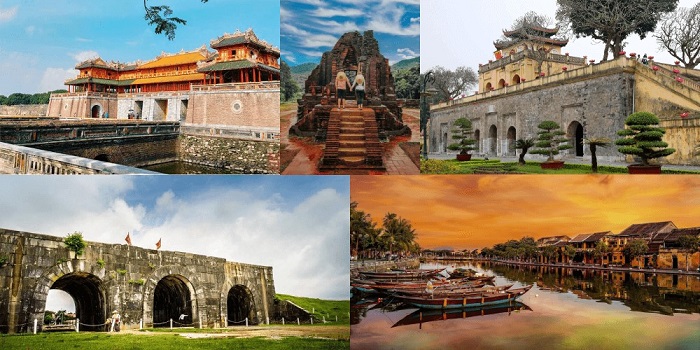 The vibrant and sustainable Vietnamese heritage in harmony with the modern era
See more>>>>> The challenges in preserving and promoting the value of cultural heritage in Vietnam today
2. Why is preserving tradition no longer sufficient in the digital age?
For many decades, heritage conservation work in Vietnam has primarily been carried out using traditional methods, based on manual storage and recording forms such as:
Paper records and administrative documents
Documentary 2D photograph
Direct commentary or printed version
Distributed storage data at each locality, museum, management unit
This method has previously played a role in the context of technological limitations; however, it has now revealed many serious bottlenecks:
Data is prone to deterioration and loss over time, especially under the influence of climate and natural disasters.
Difficult to share and access, causing a waste of heritage knowledge resources
Lack of interoperability and standardization hinders centralized management
Unable to meet the digital experience and high interaction demands of the younger generation and international tourists
Trong bối cảnh đó, Số hóa di sản Việtemerging as an inevitable solution. Through digital technology, heritage can be:
Standardized data according to unified standards
Stored centrally, safely, and durably
Accessed anytime, anywhere on digital platforms
Multi-purpose exploitation:conservation – education – research – tourism – economy
This is a pivotal transition, moving Vietnamese heritagefrom "passive conservation" to "active conservation", from preservation to spreading value.
See more>>>>>Digital transformation to preserve and sustainably promote heritage values
3. Digitizing Vietnamese heritage in the national digital transformation strategy
Recognizing the role of heritage in sustainable development and the knowledge economy,Digitizing Vietnamese heritagehas officially been placed atthe center of the national digital transformation strategy.
Specifically, the government has issuedthe program for digitizing Vietnam's cultural heritage for the period 2021–2030, with foundational objectives:
100% of special national monuments and UNESCO heritage to be digitized
Buildinga unified cultural heritage database nationwide
Linking the digitization of heritage withthe development of cultural industries, smart tourism, and the digital economy
The breakthrough of this program lies in the fact that:
Heritage is no longer just an object of preservation, but is identified asan important data resourcefor socio-economic development.
This is the first time in history that Vietnam's cultural heritage has been placed atthe center of the digital economy strategy, reflecting the long-term vision and innovative thinking of the State in the context of strong globalization and digital transformation.
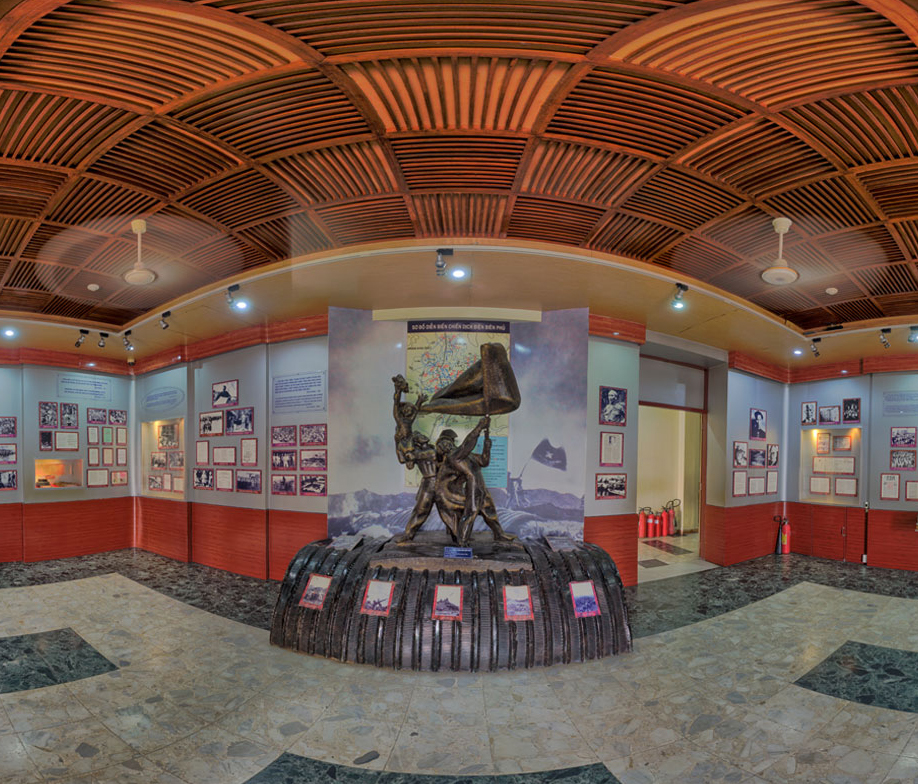 Vietnamese heritage is being reimagined through modern digital experiences
See more>>>>> The program for digitizing Vietnam's cultural heritage for the period 2021–2030
4. Digitizing Vietnamese heritage – The foundation of a smart tourism economy
In the data era, heritage is no longer simply a “destination,” but is gradually becominga comprehensive digital ecosystem. When systematically digitized, heritage can:
Integrate digital maps, AI with multilingual narration
Analyze the behavior and needs of tourists
Personalize experiences for different groups of visitors
Not be limited by space and time
As a result, heritage tourism is not only more attractive, but alsomore effective and sustainable.
Digitizing Vietnamese heritageis themost important foundationfor forming a modelof a smart tourism economy, where cultural values are preserved, spread, and transformed into long-lasting, deep economic value.
See more>>>>>Smart tourism – An inevitable development trend of Vietnam's tourism industry
II. Star Global and projects for digitizing Vietnamese heritage
1. Smart Heritage 3D/360 – Kim Liên National Special Relic Site
The Kim Liên relic site (Nghệ An) isa national special relic, associated with the homeland, family, and youth of President Ho Chi Minh – one of the most influential historical figures in modern Vietnamese history.
With the projectSmart Heritage 3D/360 Kim Liên Historical Site, Star Global focuses on the goal:
Digitizing the historical site associated with the cultural life of traditional rural villages
Supporting the work ofhistory – ideology – culture educationthrough visual experiences
Expanding access to the historical site for students, learners, and domestic and international tourists
The application of 3D/360 technology helpspreserve the original value of the historical site, while creating an approach suitable for the context of digital transformation in education and cultural tourism.
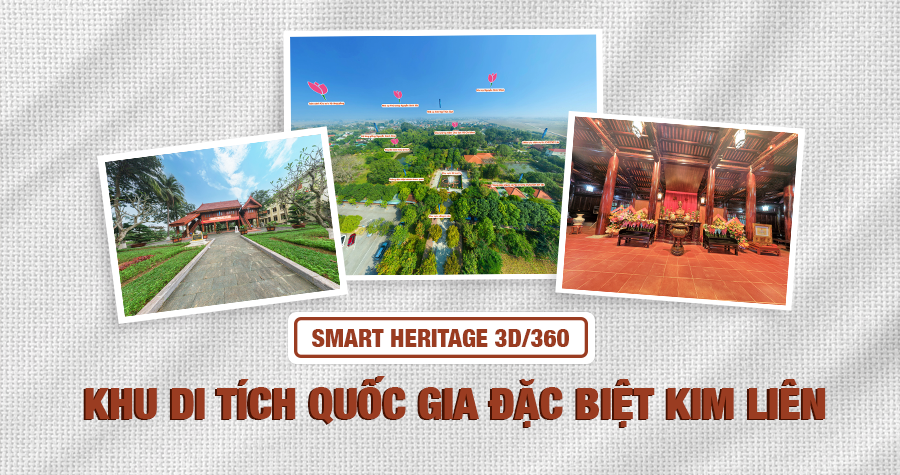 Kim Liên appears in its entirety, spreading the historical and cultural values of Uncle Ho's homeland
See more>>>>>Project Smart Heritage 3D/360 – Special National Historical Site Kim Liên
2. Smart Heritage 3D/360 – Nguyễn Dynasty Woodblocks
Nguyễn Dynasty woodblocks area documentary heritage recognized by UNESCO, including tens of thousands of woodblock prints containing valuable documents about the history, law, culture, and ideology of the Nguyễn dynasty.
Unlike architectural monuments, the Nguyễn Dynasty woodblocks pose significant preservation challenges due to:
The wooden material is easily affected by the environment
High documentary value butdifficult to access for the public
In the projectSmart Heritage 3D/360 Nguyễn Dynasty Woodblocks, Star Global aims to:
Digitizing materials to support long-term storage and reduce the need for direct contact
Increasing accessibility for researchers, academics, and the public
Contributing to the dissemination of the value ofdocumentary heritagein the digital space
The project reflects the role of digital technology inpreserving specific types of heritage, where the value lies not in physical space but in the knowledge content that is preserved.
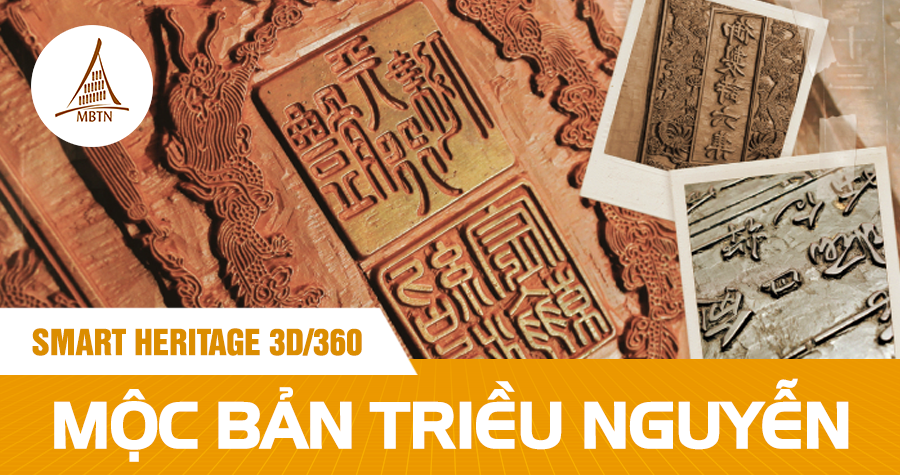 The Nguyen Dynasty woodblocks – the essence of ancient knowledge preserved and disseminated in the digital space.
See more>>>>>Smart Heritage 3D/360 Project – Nguyen Dynasty Woodblocks
3. Smart Heritage 3D/360 – Independence Palace
Independence Palace isa special national monument, associated with important historical milestones of the Vietnamese nation in the 20th century. The digitization of this monument is significant not only for architectural preservation but also forpreserving historical memories and national symbolic values.
Through the projectSmart Heritage 3D/360 Independence Palace, Star Global contributes to:
Digitizing the architectural space and typical exhibition areas in the form of 3D/360 experiences
Supporting viewersto visit online, accessing the monument without being dependent on space and time
Reducing physical impact pressure on the monument in the context of increasing visitor numbers
The project demonstrates the potential of digital technology inbringing historical heritage closer to the public, especially the younger generation and Vietnamese people abroad.
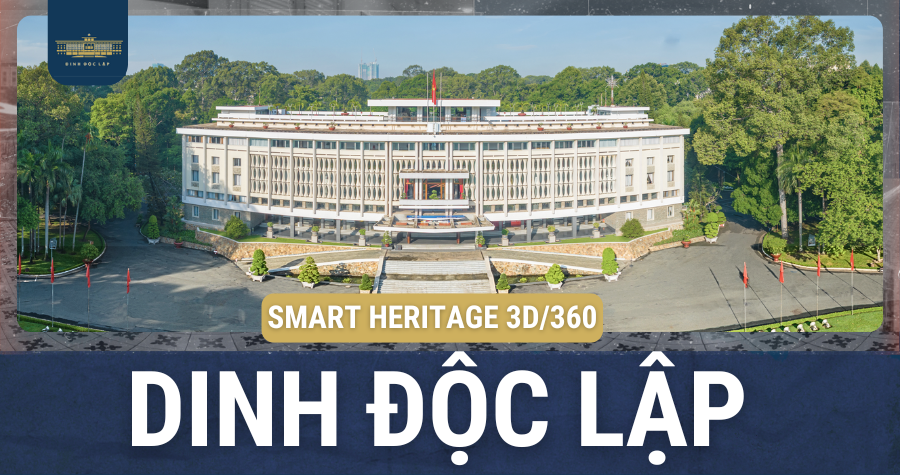 Independence Palace comes alive from every historical perspective in 3D/360 space.
See more>>>>>Smart Heritage 3D/360 Project – Independence Palace
III. Core technologies in the digitization of Vietnamese heritage
1. 3D scanning and 360° photography technology – “freezing” heritage space
One of the most important foundations ofthe digitization of Vietnamese heritageis technology:
3D scanning
Photogrammetry
High-resolution 360° panoramic photography
These technologies allow for:
Capturingevery architectural detail, pattern, material structure
Creating digital models accurate to the millimeter
Serving restoration when heritage is damaged
This is the technology that UNESCO recommends applying for heritage conservation.
2. VR/AR – Expanding heritage experiences beyond physical space
With VR (virtual reality) and AR (augmented reality),the digitization of Vietnamese heritagedoes not stop at storage but alsovividly recreates history.
Typical applications:
Remote heritage tours
Recreating ancient spaces
Multilingual narration
Interactive experiences for students
VR/AR helps heritage “tell stories,” turning dry history into an emotionally rich experience.
3. Digital Twin – A digital replica of heritage in management and conservation
Digital Twin is a higher development step ofDigitalizing Vietnamese heritage. Not only simulating images, Digital Twin also integrates:
Environmental data
Visitor flow
Degradation status
Conservation scenarios
Thanks to this, managers can:
Forecast risks
Plan restoration
Optimize tourism exploitation
Heritage is managed byreal-time data, instead of intuition.
See more>>>>>Applying 3D technology to promote the value of cultural heritage
CONCLUSION:
The picture of the country's sustainable development is opening up unprecedented opportunities toDigitalize Vietnamese heritageassert its strategic role, becoming a key to systematically preserving heritage, spreading cultural values widely, and closely connecting with contemporary life. Digitalization not only protects historical marks but also opens up new, vivid experiences, helping people and tourists appreciate cultural values across generations. By accompanying typical heritage projects,Star Globalis contributing to bringing the precious cultural and historical values of Vietnam closer to the domestic and international community, creating a solid foundation for heritage not only to be preserved but also to become an important resource to promote tourism, cultural economy, elevate the Vietnamese brand, and spread the national image on the global cultural map.